
Emotions (and feelings) get a pretty bad rap. Some people prefer to ignore them totally, while some want to act them out immediately and to the exact intensity that they feel them. Most of us feel some measure of discomfort in emotionally intense situations. We have mostly been taught to be wary of them, to not trust them and just avoid them altogether if possible. The question then is: are our emotions friend or foe?
In-born warning system
One of my favourite inventions on a car is Park Assist. When reversing a car without Park Assist you have to contort your body in all sorts of ways to make sure you don’t bump into something, or God-forbid someone. Park Assist lets you know when you are too close to something for comfort, sounds a warning and you can decide whether to keep reversing or not, based on that warning. It’s such a handy function. Emotions work much the same as Park Assist. They serve as a warning or trigger system telling us that something that has happened to us or in our environment needs attention [1].
What are emotions and feelings?
I will define emotions and feelings simultaneously because often we use the two words interchangeably. Emotions are essentially our first reaction to an event or situation, while feelings come later when we start to analyse the situation, and everything sinks in[2]. Emotions are physiological and felt as sensations in the body, arising from chemicals released into our body in response to a specific trigger. Fun fact: it takes our brain ¼ of a second to interpret a trigger, and another ¼ second to produce the chemicals. Feelings are influenced by emotions but depend more on our thoughts regarding the event [3]. Feelings arise as we interpret the body sensations and give them meaning. Emotions are short term, whereas feelings can last a long time. We will go in depth on feelings in a future post.
Positive and negative emotions
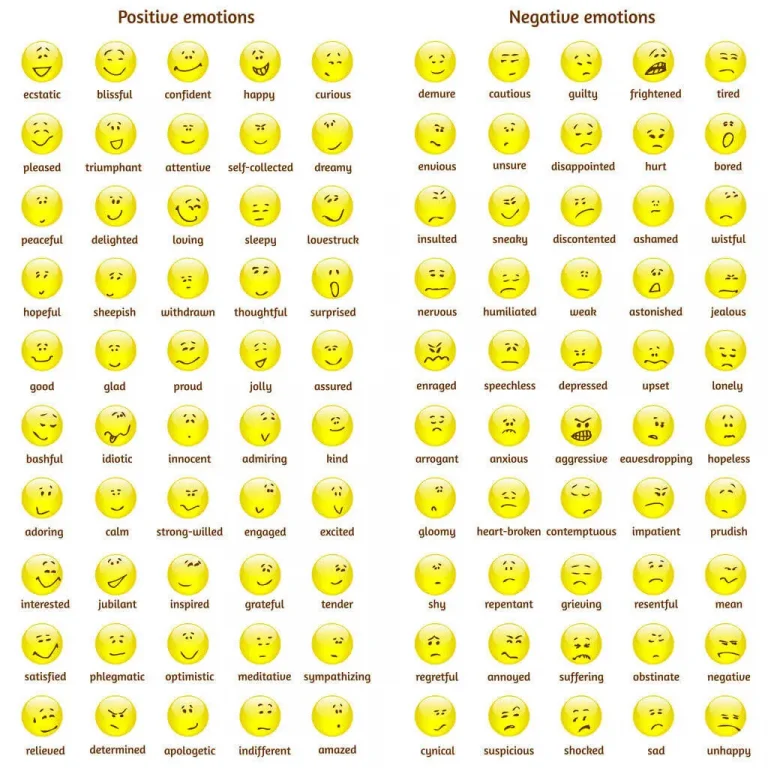
We experience a range of emotions through our lifetime, from absolutely gut-wrenching to absolutely euphoric. Positive emotions are those emotions that we find pleasant or desirable to experience [4]. Examples include joy, satisfaction, awe, interest, and serenity. Negative emotions on the other hand, are those that are unpleasant and unhappy like fear, disgust, anger, rage, or annoyance. The distinction between the two is not about good vs bad, or right vs wrong but rather about how the emotions feel to us – pleasant or unpleasant. Both negative and positive emotions are important and necessary for our survival. Imagine if the Park Assist didn’t sound the annoying beep-beep when your car is too close to the wall?
Fun fact: it takes our brain ¼ of a second to interpret a trigger, and another ¼ second to produce the chemicals.
Why emotions are important
- Emotions can motivate you to take action – for example when you are nervous about an exam you are more likely to study. We are also more motivated to take actions that result in positive emotions [5]
- Emotions help you to avoid danger – a typical example is when you spot a hissing snake, and your body prepares to run away or fight. They protect us from dangers in our environment.
- Emotions can help you make decisions – they influence even the most rational and logical decisions. Advertisers know this well and often play to our emotions when selling to us.
- Emotions help others to understand you better – when you convey your emotions to others or when they observe your body language and facial expressions, those around you can understand what you are experiencing and respond appropriately.
- Emotions help you to understand others better – when you observe others you gain information about what they like and don’t like and who they are in general. Accurately perceiving and interpreting others’ emotional reactions is part of what is called emotional intelligence.
Managing emotions
It is often the negative emotions that we struggle to manage. Awareness is the starting point in managing emotions. Identify the part of your body that has the emotional sensation e.g. your racing heart or tight-knotted stomach[6]. Name the emotion you are experiencing and allow yourself to feel it without trying to suppress it or make a value judgement. Remember emotions are neither right nor wrong. Accept them for what they are and find out what information they are signalling – e.g. what is happening around you, in your relationships? For example, anger and anxiety indicate that your well-being is under threat[7]. Fear is often an indication that our safety has been compromised. Frustration or resentment serve as motivation to change something in a relationship. Awe and interest can motivate us to keep exploring a subject. We will explore the subject of managing and getting the best out of our emotions in the next post.
Conclusion
Emotions play an important role in our lives. Granted, we cannot make decisions based solely on emotions, but they do form an integral part of the process. We can only ignore our emotions, and those of others, to our detriment. They serve as a signal system, letting us know when something out of the normal has occurred, and enabling us to take action. They provide us with information about our world that we need to function optimally [8]. Emotions are indeed our friend.
References
[1] Kendra Cherry, 2021. https://www.verywellmind.com/the-purpose-of-emotions-2795181
[2] Michael Miller, 2015. https://www.6seconds.org/2017/05/15/emotion-feeling-mood/
[3] Rachel Allyn, 2022. https://www.psychologytoday.com/za/blog/the-pleasure-is-all-yours/202202/the-important-difference-between-emotions-and-feelings
[4] Courtney Ackerman, 2019. https://positivepsychology.com/positive-negative-emotions/#differences
[5] Kendra Cherry, 2021. https://www.verywellmind.com/the-purpose-of-emotions-2795181
[6] Rachel Allyn, 2022. https://www.psychologytoday.com/za/blog/the-pleasure-is-all-yours/202202/the-important-difference-between-emotions-and-feelings
[7] Elizabeth Scott, 2022. https://www.verywellmind.com/embrace-negative-emotions-4158317
[8] Michael Miller, 2015. https://www.6seconds.org/2017/05/15/emotion-feeling-mood/